

In today’s interconnected digital panorama, the security of your web hosting environment is more important than ever. Cyber threats have grown increasingly sophisticated and frequent, ranging from malware injections and ransomware attacks to DDoS disruptions and phishing attempts. For businesses, even a single security breach can result in lost revenue, damaged client trust, and long-term reputational harm. That’s why securing your website goes beyond technical necessity; it’s a critical business strategy.
A secure hosting environment safeguards not only your website but also sensitive customer data, transaction records, and proprietary business information. Reliable hosting providers implement measures such as firewalls, regular server monitoring, automatic updates, SSL encryption, and frequent backups to reduce risks. These features ensure that your site remains accessible, data is protected, and recovery from potential incidents is swift and efficient.
Why Secure Web Hosting Matters
1. Protection of Sensitive Data
Websites often collect and store sensitive information, such as names, addresses, contact details, and payment information. If this data is exposed or accessed by unauthorized users, it can result in identity theft, financial losses, and legal issues. best secure web hosting uses security measures such as encryption, access controls, and monitoring to help protect sensitive information from cyber threats.
2. Maintaining Business Reputation
A security breach can have a serious impact on a business’s reputation. Customers expect websites to handle their personal information securely, and even one major security incident can reduce trust and customer loyalty. Reliable and secure web hosting helps protect your website from common threats while demonstrating that data security is a priority for your business.
3. Compliance with Regulations
Businesses that collect user information may need to follow data protection regulations such as the General Data Protection Regulation (GDPR) and the California Consumer Privacy Act (CCPA). These regulations require organizations to take appropriate steps to protect personal data. Choosing secure web hosting with suitable security controls can support your overall compliance efforts and help reduce the risks associated with data breaches.
4. Preventing Website Downtime
Cyberattacks, including Distributed Denial-of-Service (DDoS) attacks, can overwhelm server resources and make a website unavailable. Extended downtime can result in lost revenue, frustrated visitors, and a poor user experience. Secure web hosting may include features such as DDoS protection, network monitoring, firewalls, and backup systems to help keep websites available and resilient during security incidents.
5. Safeguarding Against Malware
Malware can infect websites, modify files, steal information, redirect visitors, or disrupt normal website operations. Secure hosting environments can provide features such as malware scanning, threat monitoring, firewalls, and automated security updates to help identify and address potential threats. Regular security monitoring can reduce the risk of malware affecting your website and its visitors.
Key Features of Secure Web Hosting
A secure web hosting security environment should include multiple security measures to protect your website, data, and visitors from online threats. When choosing a hosting provider, look for the following essential security features:
1. SSL Certificates
SSL certificates encrypt the data exchanged between your website and its visitors, making it more difficult for attackers to intercept sensitive information. They are especially important for protecting login credentials, payment information, contact details, and other private data. The SSL Certificates Guide can help you understand the differences between available SSL options.
2. Firewall Protection
A firewall acts as a security barrier between your website and potentially harmful traffic. It monitors incoming and outgoing connections and can block suspicious requests before they reach your server. A Web Application Firewall (WAF) can provide additional protection against threats such as SQL injection, cross-site scripting (XSS), and other common web-based attacks.
3. Regular Backups
Regular backups are an important part of website security and disaster recovery. If your website is affected by malware, a cyberattack, accidental data deletion, or a server failure, recent backups allow you to restore your website more quickly. Automated backups can make the recovery process easier while helping minimize potential downtime and data loss.
4. DDoS Protection
Distributed Denial-of-Service (DDoS) attacks attempt to overwhelm a server with a large volume of traffic, potentially making a website slow or unavailable. DDoS protection identifies and filters malicious traffic before it can significantly affect your server. Choosing a hosting provider with reliable DDoS protection can help improve website availability during an attack.
5. Malware Scanning and Removal
Malware can compromise website files, steal sensitive information, redirect visitors, or interfere with normal website operations. Regular malware scanning helps identify suspicious files and potentially harmful activity at an early stage. Hosting solutions that include automated malware detection and removal can provide an additional layer of protection and help keep your website secure.
Choosing a Secure Web Hosting Provider
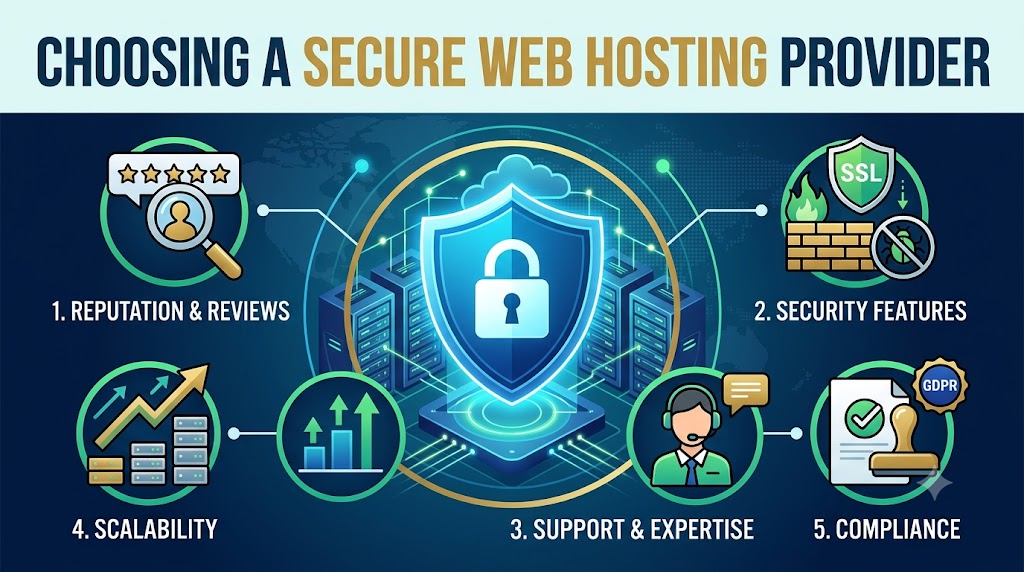
Selecting a secure web hosting provider is an important decision that can directly affect your website’s security, performance, and reliability. A good hosting provider should offer strong security infrastructure, responsive support, and the flexibility to meet your website’s changing needs. Consider the following factors before making your choice:
1. Reputation and Reviews
Before choosing a hosting provider, research its reputation and read reviews from existing and previous customers. Pay attention to feedback about server reliability, security incidents, uptime, customer support, and how quickly the provider responds to technical problems.
A provider with a strong track record is generally a better choice for businesses that depend on their websites for daily operations. You can also check how long the provider has been operating and whether it has experience serving websites similar to yours.
2. Security Features
Review the security features included with each hosting plan rather than focusing only on price and server specifications. Essential protections may include SSL certificates, firewalls, malware scanning, automated backups, DDoS protection, secure server configurations, and regular security updates.
A strong security setup uses multiple layers of protection instead of relying on a single feature. For example, a firewall can help filter suspicious traffic, while malware scanning can detect potentially harmful files. You can also learn more about firewall configuration and DDoS protection when evaluating hosting security.
3. Support and Expertise
Technical support plays an important role in maintaining a secure hosting environment. Even with strong security measures in place, websites can experience configuration problems, malware infections, server issues, or unexpected security incidents.
Choose a hosting provider that offers responsive support and has knowledgeable technical staff who can help troubleshoot problems. Availability through channels such as live chat, tickets, or phone support can also be valuable when you need assistance quickly. For businesses and mission-critical websites, 24/7 technical support can provide additional peace of mind.
4. Scalability
Your website’s resource and security requirements may increase as your traffic, customer base, and online operations grow. A hosting provider should give you the flexibility to upgrade resources without requiring a complete migration to another platform.
Look for scalable hosting solutions that allow you to increase CPU, RAM, storage, bandwidth, or other resources when necessary. It is also useful to check whether the provider offers different hosting options, such as VPS, dedicated servers, or managed hosting, so you can move to a more powerful environment as your requirements change.
5. Compliance
Data protection and privacy requirements can vary depending on your industry, business location, and the type of information your website collects. Before selecting a hosting provider, understand which regulations apply to your business and check whether the provider offers appropriate security and data protection measures.
Regulations such as GDPR can impose requirements for handling personal data, while businesses operating in specific regions may have additional privacy obligations. Keep in mind that using a compliant hosting provider alone does not automatically make your website fully compliant; your website, applications, processes, and data-handling practices must also meet the applicable requirements.
Conclusion
In today’s digital world, secure web hosting is not just a luxury; it’s a necessity. Cyber threats are becoming increasingly sophisticated, and even small vulnerabilities can have major consequences for your business. Protecting your website from malware, hacking attempts, and DDoS attacks is essential not only for maintaining customer trust but also for complying with industry regulations and safeguarding sensitive data.
A secure hosting environment ensures that your website remains accessible, performs reliably, and can quickly recover in case of unexpected issues. Features like SSL certificates, firewalls, daily backups, malware scanning, and DDoS protection are critical components of a robust hosting setup. Choosing a provider that bundles these features with expert 24/7 support ensures you have assistance whenever technical challenges arise, giving you peace of mind.
FAQs
1. What is secure web hosting?
Secure web hosting means your website is hosted on servers with strong protections against cyber threats, including malware, DDoS attacks, and unauthorized access. It ensures data integrity, uptime, and user trust.
2. Why is secure hosting important for businesses?
Secure hosting protects sensitive business and customer information, prevents downtime, and maintains credibility. A breach can lead to financial loss, data theft, and reputational damage.
3. What security features should I look for in a hosting provider?
Look for features such as SSL certificates, firewalls, malware scanning, daily backups, DDoS protection, and server monitoring. These collectively ensure your website remains safe and functional.
4. Does SSL encryption come standard with secure hosting?
Most modern secure hosting providers include SSL certificates by default, which encrypt data between your website and visitors, enhancing security and boosting search engine rankings.
5. Can secure hosting prevent hacking completely?
No hosting can guarantee 100% prevention, but secure hosting significantly reduces risks. Combined with strong passwords, regular updates, and security best practices, the likelihood of attacks is minimized.
6. How does secure hosting impact website performance?
Secure hosting often comes with faster, well-maintained servers. Features like regular monitoring, malware scanning, and optimized resources can improve uptime and overall site speed.
7. Is secure hosting more expensive than standard hosting?
While secure hosting may cost slightly more, the investment is justified by protection from potential cyberattacks, downtime, and data loss, which can be far more costly than the hosting fees.
8. Can secure hosting help with SEO?
Yes. Google and other search engines favor websites that are secure (HTTPS) and reliable. A secure hosting environment can therefore improve your rankings and attract more traffic.
9. How often should I back up my website?
Daily backups are ideal, especially for e-commerce sites or websites that update frequently. Secure hosting providers usually offer automatic backup options to make this process seamless.
10. How do I choose a reliable, secure hosting provider?
Look for providers with a proven track record, high uptime guarantees, robust security features, 24/7 support, and positive reviews. Features like NVMe SSDs, DDoS protection, and multiple data centers are added advantages
Suggestions:
- https://mainvps.net/blog/lifetime-web-hosting-2026/
- https://mainvps.net/blog/windows-reseller-web-hosting/
- https://mainvps.net/blog/best-wordpress-hosting-providers/
- https://mainvps.net/blog/linux-vps-hosting-india/
- https://mainvps.net/blog/low-cost-windows-vps-hosting-in-india/
- https://mainvps.net/blog/cheap-dedicated-server-hosting-providers/
- https://mainvps.net/blog/windows-server-guide-dde-dns-tls-1-2-uptime/
- https://mainvps.net/blog/dedicated-server-hosting-netherlands/
- https://mainvps.net/blog/dedicated-server-low-price/
- https://mainvps.net/blog/vps-hosting-in-los-angeles-us/
- https://mainvps.net/blog/dedicated-server-in-nedzone-nl/
- https://mainvps.net/blog/buy-linux-vps-hosting/
- https://mainvps.net/blog/managed-windows-vps-hosting/
- https://mainvps.net/blog/what-is-wmi-provider-host-complete-guide/
- https://mainvps.net/blog/cloud-hosting-vs-vps-2026/
- https://mainvps.net/blog/vps-hosting-for-ecommerce-guide/
- https://mainvps.net/blog/vps-hosting-for-saas-applications/
- https://mainvps.net/blog/vps-reseller-hosting-in-netherlands/
- https://mainvps.net/blog/dedicated-server-hosting-in-us/
- https://mainvps.net/blog/linux-reseller-hosting/
- https://mainvps.net/blog/dedicated-server-with-nvme-us/
- https://mainvps.net/blog/dedicated-server-with-root-access-us/
- https://mainvps.net/blog/dedicated-server-with-cpanel-us/
- https://mainvps.net/blog/litespeed-vps-hosting-in-netherlands/
- https://mainvps.net/blog/cheap-windows-vps-hosting/
- https://mainvps.net/blog/affordable-dedicated-server-netherlands/
- https://mainvps.net/blog/us-windows-vps-hosting/
- https://mainvps.net/blog/dedicated-server-hosting-services-in-the-us/
- https://mainvps.net/blog/cloud-servers-for-small-business/
- https://mainvps.net/blog/low-cost-dedicated-server-usa/