
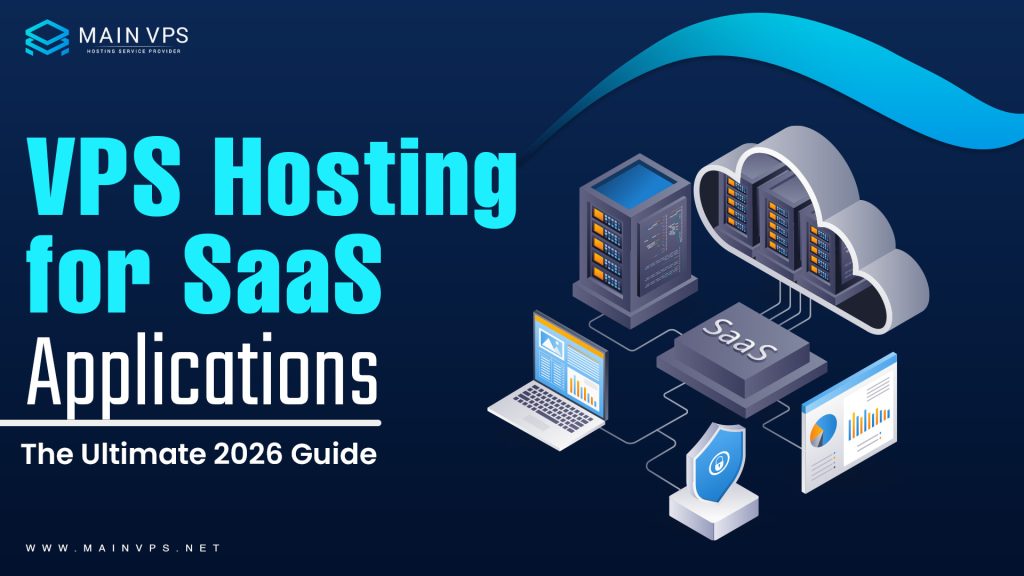
In the rapidly evolving digital landscape of 2026, Software as a Service (SaaS) has become the backbone of modern businesses. From CRM platforms and project management tools to AI-powered applications, SaaS products are everywhere. But behind every successful SaaS product lies a robust, scalable, and secure hosting infrastructure.
One of the most practical and cost-effective solutions for building and scaling SaaS platforms is Best VPS hosting for SaaS applications.
While cloud infrastructure often dominates the conversation, VPS hosting continues to play a critical role, especially for startups, developers, and businesses looking for full control, predictable pricing, and strong performance without the complexity of cloud ecosystems.
This guide dives deep into architecture, performance optimisation, DevOps workflows, scaling strategies, and real-world implementation of VPS hosting for SaaS.
Understanding SaaS Infrastructure Requirements
Before choosing a VPS, it’s important to understand what the best hosting for saas applications actually needs.
Core Requirements of SaaS Platforms
- High uptime and availability
- Secure multi-user environment
- Fast API response times
- Scalable backend architecture
- Database performance optimization
- Continuous deployment capability
Unlike static websites, SaaS applications are dynamic, multi-layered systems that include:
- Frontend (React, Vue, Angular)
- Backend APIs (Node.js, Django, Laravel)
- Database (MySQL, PostgreSQL)
- Caching (Redis)
- Background workers (queues, cron jobs)
A VPS can efficiently handle all these layers when properly configured.
Why VPS Hosting for SaaS Applications is Perfect
1. Predictable Performance for Applications
SaaS platforms rely heavily on consistent performance. VPS ensures:
- Reserved CPU and RAM
- No resource stealing from other users
- Stable response times
This is critical for:
- API latency
- Database queries
- User sessions
2. Full Root Access = Complete Freedom
With VPS hosting, you can:
- Install custom frameworks
- Configure server-level optimizations
- Use Docker and Kubernetes (lightweight setups)
- Modify kernel parameters
This level of control is essential for SaaS developers.
3. Cost Efficiency for Startups
Cloud platforms can quickly become expensive due to:
- Bandwidth costs
- Compute scaling
- Storage charges
VPS provides:
- Fixed pricing
- Better cost control
- Ideal for MVP and early growth stages
4. Isolation and Security
Each VPS runs in an isolated environment, ensuring:
- Better data security
- Reduced risk from other users
- Dedicated firewall configurations
Advanced VPS Architecture for SaaS
A well-optimized VPS SaaS architecture looks like this:
1. Reverse Proxy Layer
- NGINX or HAProxy
- SSL termination
- Request routing
2. Application Layer
- Backend services (Node.js, Python, PHP)
- REST/GraphQL API
3. Database Layer
- MySQL/PostgreSQL
- Replication (optional)
4. Cache Layer
- Redis
- In-memory data storage
5. Queue System
- RabbitMQ / Kafka
- Handles background jobs
Multi-Tenant SaaS on VPS
Most SaaS apps are multi-tenant, meaning multiple users share the same application.
Approaches:
1. Shared Database
- All users in one DB
- Cost-effective
- Requires strong indexing
2. Separate Databases
- One DB per client
- Better security
- Higher resource usage
3. Hybrid Model
- Shared + isolated data
Performance Optimization
1. CPU Optimization
- Use high-frequency cores
- Optimize thread handling
2. Memory Optimization
- Tune MySQL buffers
- Use Redis caching
3. Disk Optimization
- NVMe SSD preferred
- Enable disk caching
4. Application Optimization
- Minimize API calls
- Use async processing
Database Scaling Strategies
The database is the heart of SaaS hosting solutions.
Techniques:
- Read replicas
- Query indexing
- Partitioning
- Connection pooling
DevOps Workflow for VPS SaaS
CI/CD Pipeline
- GitHub Actions
- GitLab CI/CD
- Auto deployment
Containerization
- Docker for consistency
- Easy migration
Monitoring
- Prometheus
- Grafana dashboards
- Log monitoring
Security Hardening for SaaS on VPS
Must-Implement Security:
- Firewall (CSF / iptables)
- Fail2Ban
- SSL/TLS encryption
- DDoS protection
- Secure API authentication
Scaling SaaS on VPS
Vertical Scaling
- Upgrade RAM/CPU
- Quick and simple
Horizontal Scaling
- Multiple VPS servers
- Load balancer
- Distributed system
Load Balancing Setup
Use:
- NGINX
- HAProxy
Benefits:
- Traffic distribution
- High availability
- Better performance
Backup & Disaster Recovery
Backup Strategy:
- Daily snapshots
- Offsite backups
- Database dumps
Disaster Recovery:
- Fast restore
- Redundant systems
VPS vs Cloud for SaaS (Detailed View)
| Feature | VPS | Cloud |
|---|---|---|
| Cost | Low | Variable |
| Control | Full | Limited |
| Scalability | Medium | High |
| Complexity | Low | High |
Real SaaS Deployment Example
Example Stack:
- Frontend: React
- Backend: Node.js
- DB: PostgreSQL
- Cache: Redis
- Server: VPS (NGINX)
Cost Optimization Tips
- Use caching
- Optimize queries
- Avoid overprovisioning.
- Monitor usage
Common Mistakes in SaaS Hosting
- Ignoring scalability
- Poor database design
- No monitoring
- Weak security
Future Trends in SaaS Hosting
- Hybrid VPS + Cloud
- Edge computing
- AI-based scaling
- Serverless integration
Commercial Perspective (Important)
Using allows businesses to:
- Launch faster
- Reduce infrastructure costs.
- Maintain full control
- Scale gradually
Advanced Performance Optimization for SaaS on VPS
Running a SaaS application on a VPS is not just about deployment; it’s about continuous performance tuning. As your user base grows, even small inefficiencies in your application or server configuration can lead to slower response times and poor user experience. Optimizing your VPS ensures that your SaaS platform remains fast, responsive, and capable of handling increasing workloads without unnecessary upgrades.
Key Performance Optimization Techniques:
- Use NGINX as a reverse proxy to handle high concurrent requests efficiently
- Enable Gzip or Brotli compression to reduce payload size and improve load speed
- Implement Redis or Memcached caching to minimize database load
- Optimize database queries with proper indexing and query planning
- Use HTTP/2 or HTTP/3 protocols for faster data transfer
- Minimize API response size by using pagination and filtering
Scalability Planning for SaaS Growth
One of the biggest challenges in SaaS development is preparing for growth. While MainVPS hosting provides a strong starting point, you must design your application in a way that allows easy scaling when demand increases. Planning scalability early helps avoid downtime, performance bottlenecks, and costly migrations later.
Scalability Strategies:
- Start with vertical scaling by upgrading CPU and RAM as needed
- Implement horizontal scaling by adding multiple VPS instances
- Use load balancers like NGINX or HAProxy to distribute traffic
- Separate application and database servers for better performance
- Prepare your system for containerization (Docker) for future cloud migration
Security Best Practices for SaaS on VPS
Security is one of the most critical aspects of any SaaS application, especially when handling sensitive user data. A poorly secured VPS can become an easy target for cyberattacks. By implementing strong security measures, you can protect your application, users, and business reputation.
Essential Security Measures:
- Disable root login and use SSH key-based authentication
- Install Fail2Ban to block brute-force attacks
- Configure firewall rules using iptables or CSF
- Enable SSL/TLS encryption for secure communication
- Keep your OS and software packages updated regularly
- Use strong password policies and two-factor authentication
Database Optimization for SaaS Applications
The database is the backbone of any SaaS platform. Poor database performance can slow down your entire application. Optimizing your database ensures faster queries, better scalability, and improved overall performance.
Database Optimization Tips:
- Use indexes on frequently accessed columns
- Implement connection pooling to reduce overhead
- Optimize queries to avoid unnecessary load
- Use read replicas for scaling database performance
- Regularly clean and maintain your database
Monitoring and Maintenance
To keep your SaaS application running smoothly, continuous monitoring is essential. Without proper monitoring tools, it becomes difficult to detect issues before they affect users. A proactive monitoring strategy ensures better uptime and performance.
What You Should Monitor:
- CPU and memory usage
- Disk I/O and storage health
- API response time and latency
- Error rates and server logs
- Network traffic and bandwidth usage
Recommended Tools:
- Prometheus and Grafana for metrics
- Netdata for real-time monitoring
- ELK Stack for log management
DevOps and Automation for VPS SaaS
Automation plays a key role in modern SaaS development. By implementing DevOps practices, you can streamline deployments, reduce human errors, and improve development efficiency.
DevOps Best Practices:
- Use CI/CD pipelines for automated deployments
- Containerize applications using Docker
- Use version control systems like Git
- Automate backups and updates
- Implement staging environments for testing
Business Benefits of VPS Hosting for SaaS
Choosing VPS hosting is not just a technical decision; it also impacts your business growth and profitability. A well-optimized VPS setup can provide a competitive advantage by delivering better performance at a lower cost.
Key Business Advantages:
- Lower infrastructure costs compared to cloud hosting
- Faster deployment and time-to-market
- Full control over the server environment
- Ability to customize and optimize performance
- Easy transition to the cloud as your business scales
Final Thoughts
However, in the year 2026, developing a SaaS application is no longer just coding; it’s more about the infrastructure that supports your growth. Best vps hosting for saas applications in India is one of the best and most viable options for businesses and startups. It offers the best combination of performance, cost-effectiveness, and flexibility. VPS is the best option for developing an MVP for your business. Although cloud infrastructure offers the highest scalability for your business, it also increases the complexity and the cost.
Frequently Asked Questions (FAQs)
1. What is VPS hosting for SaaS applications?
VPS hosting provides a virtual server with dedicated resources for running SaaS applications. It ensures better performance, control, and security compared to shared hosting. It is ideal for startups and growing SaaS platforms.
2. Is VPS hosting good for SaaS startups?
Yes, VPS hosting a high-traffic website is a great choice for SaaS startups due to its affordability and flexibility. It allows developers to build and deploy applications without high infrastructure costs. It also provides room for future scaling.
3. Can a VPS handle multiple SaaS users?
Yes, a properly optimized VPS can handle multiple users efficiently. Performance depends on server resources and application optimization. As traffic grows, you can scale vertically or add more servers.
4. How secure is VPS hosting for SaaS applications?
VPS hosting can be highly secure if configured correctly. You can implement firewalls, SSH keys, SSL encryption, and security tools like Fail2Ban. Regular updates and monitoring are also essential.
5. What tech stack can I run on a VPS for SaaS?
6. Can I scale my SaaS application on VPS?
Yes, VPS supports vertical scaling by upgrading resources like CPU and RAM. You can also implement horizontal scaling by using multiple VPS servers. Planning scalability early is important.
7. Is VPS better than cloud hosting for SaaS?
VPS is better for cost control and simplicity in the early stages. Cloud hosting is better for large-scale applications requiring high scalability. Many businesses start with VPS and later move to the cloud.
8. Do I need technical knowledge to manage a VPS?
Yes, basic server management knowledge is required for VPS hosting. You should understand Linux, security, and deployments. Managed Windows VPS options are available if you prefer less technical involvement.
9. What are the main challenges of using VPS for SaaS?
Some challenges include limited scalability compared to cloud and manual management. You also need to handle security, backups, and performance optimization yourself. Proper planning can reduce these issues.
10. When should I upgrade from VPS to cloud hosting?
You should consider upgrading when your SaaS application experiences high traffic or needs auto-scaling. Cloud hosting becomes useful when performance demands exceed VPS limits. It ensures better reliability and scalability.
Suggestions:
- https://mainvps.net/blog/linux-reseller-hosting/
- https://mainvps.net/blog/lifetime-web-hosting-2026/
- https://mainvps.net/blog/windows-reseller-web-hosting/
- https://mainvps.net/blog/best-wordpress-hosting-providers/
- https://mainvps.net/blog/linux-vps-hosting-india/
- https://mainvps.net/blog/low-cost-windows-vps-hosting-in-india/
- https://mainvps.net/blog/cheap-dedicated-server-hosting-providers/
- https://mainvps.net/blog/windows-server-guide-dde-dns-tls-1-2-uptime/
- https://mainvps.net/blog/dedicated-server-hosting-netherlands/
- https://mainvps.net/blog/dedicated-server-low-price/
- https://mainvps.net/blog/vps-hosting-in-los-angeles-us/
- https://mainvps.net/blog/dedicated-server-in-nedzone-nl/
- https://mainvps.net/blog/buy-linux-vps-hosting/
- https://mainvps.net/blog/managed-windows-vps-hosting/
- https://mainvps.net/blog/host-foundry-on-ubuntu-server/
- https://mainvps.net/blog/what-is-wmi-provider-host-complete-guide/