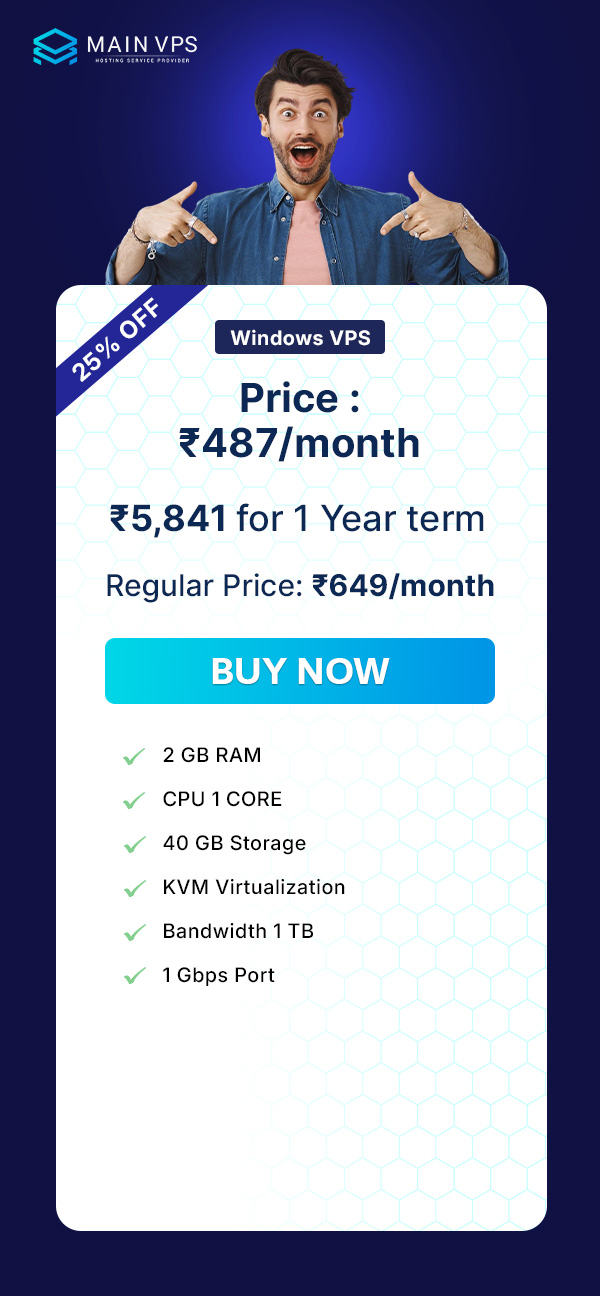


With business processes increasingly going online, it is crucial to select the most appropriate type of hosting. While shared hosting works perfectly well for small sites, larger companies, developers, and organizations need much more in terms of customization, performance, and resources. In such a case, an unmanaged Windows VPS hosting plan can be considered an ideal choice.
A Virtual Private Server (VPS) refers to a hosting plan whereby one gets dedicated server resources within a virtualized setting. By combining VPS hosting with the use of the Windows operating system, one can enjoy the best in terms of hosting cost websites, databases, applications, and remote desktop environments.
Unmanaged hosting plans provide total freedom of customization since there is no involvement of third-party service providers.
What Is Unmanaged Windows VPS Hosting?
Windows unmanaged VPS hosting is a type of VPS hosting provided by the hosting provider in which the hosting service provides an individual server operating on a Windows OS, but the management and maintenance of the server are taken care of completely by the customer.
The hosting provider typically handles:
- Maintenance of physical servers
- Networking services
- Management of data centers
- Replacement of hardware components
- Deployment of VPSs
The customer is responsible for:
- Installation and configuration of Windows
- Updating security
- Installing firewall
- Software installation
- Server monitoring
- Backup management
- Troubleshooting issues
This setup is ideal for users with server administration experience who want complete control over their hosting environment.
How Does a Windows VPS Work?
Virtualized server partitioning is employed in a low-cost Windows VPS to divide a single physical server into various virtual servers.
Resources allotted for each VPS include:
- Number of CPU cores
- Memory RAM
- Disk space
- Operating System Environment
Despite multiple virtual servers sharing the same physical infrastructure, each of them works separately.
VPS users get the opportunity to manage their server through Microsoft Remote Desktop Protocol (RDP), which lets them control and configure their software and settings as on any real Windows computer.
Why Choose Unmanaged Windows VPS Hosting?
Many businesses and developers choose unmanaged VPS hosting because it offers a combination of performance, flexibility, and affordability.
Complete Administrative Control
Administrative access represents one of the most important benefits of unmanaged hosting.
With complete server admin access, you can:
- Customize server parameters
- Install custom software
- Configure Windows services
- Create user accounts
- Tune server performance according to your needs
All of this isn’t easily achievable when using shared hosting options.
Lower Hosting Costs
Since managed hosting includes maintenance services and technical support, it entails higher recurring fees.
In the case of unmanaged hosting, you can:
- Manage the server yourself
- Pay less for hosting services
- Pay for infrastructure only
This means that experienced users can cut their expenses considerably.
Greater Flexibility
Companies typically have specific hosting requirements.
By choosing unmanaged cheap Windows VPS hosting, you’ll be able to:
- Install proprietary software
- Use custom applications
- Configure specialized databases
- Set up dedicated development environments
- Implement enterprise-level solutions
Basically, there will be no limitations in contrast to a shared hosting environment.
Dedicated Resources
Unlike shared hosting, VPS hosting provides dedicated resources.
Benefits include:
- Better website performance
- Faster application response times
- Improved reliability
- Consistent server speed
Your resources are not affected by other users on the server.
Key Features of Unmanaged Windows VPS

Before choosing a managed VPS hosting India package, it’s important to learn about the key advantages of a Windows VPS.
Windows Server Operating System
The most common operating systems are:
- Windows Server 2019
- Windows Server 2022
- Windows Server 2025 (if available)
These operating systems are designed for high workload conditions.
Remote Desktop Access
With RDP, customers can control their VPS remotely.
They will be able to do the following with the help of RDP:
- Install applications
- Setup
- Monitoring
- File transfers
- Database management
A GUI environment makes management simpler.
SSD or NVMe Storage
The latest technologies used by the best providers today include SSD or NVMe disks.
Their benefits are:
- Faster startup time
- Fast application launch
- Better database handling
- Low latency
NVMe technology is significantly faster than standard SSDs.
Scalable Resources
As your business grows, VPS resources can often be upgraded without migration.
You can increase:
- CPU power
- RAM
- Storage
- Bandwidth
This scalability makes VPS hosting suitable for growing businesses.
Administrator Access
Full administrator privileges allow users to customize the environment according to their requirements.
You can:
- Install software
- Create scripts
- Modify registry settings
- Configure services
This freedom is one of the biggest advantages of unmanaged hosting.
Common Use Cases for Unmanaged Windows VPS
Windows VPS hosting is used in a variety of industries for various reasons.
Web Hosting
A company can host:
- ASP.NET websites
- e-commerce sites
- business portals
- corporate websites
Hosting on a Windows server will be especially effective for Microsoft-oriented web applications.
Application Hosting
Most custom applications are dependent on a Windows server environment.
For example:
- CRM systems
- ERP software
- accounting applications
- Other business software
This is where a VPS will be helpful.
Remote Desktop Workstations
Companies usually utilize Windows VPS as remote desktop computers.
Employees will be able to:
- Access their files from remote locations
- Use the corporate software
- Feel comfortable working remotely
This is especially useful for remote teams.
Database Hosting
The Windows VPS server hosting services include:
- Microsoft SQL Server
- MySQL
- PostgreSQL
VPS will enhance the database’s functionality.
Software Development and Testing
Programmers normally use VPS servers for:
- Application testing
- Development servers
- Projects involving continuous integration
- Software deployment
It allows for experimentation within a controlled environment.
Advantages of Unmanaged Windows VPS
Enhanced Performance
One of the key advantages of an unmanaged Windows VPS service is the level of performance that can be attained when compared to the performance levels in a shared hosting environment. Because you are assigned dedicated computing resources, including CPU cores, memory, and storage space, your application or website is not affected by what other users might be doing on the server.
Advantages include:
- Increased speed
- Smooth application performance
- Enhanced user experience
- Lower latency
- Increased responsiveness
These benefits become very important when you are running critical business applications or e-commerce sites, where performance will affect your bottom line.
Improved Security Control
When using unmanaged hosting, users get full freedom when setting up the security features of the server. As opposed to managed VPS India services, where the security configurations could be dictated by the policies of the service provider, the unmanaged VPS lets users configure their own security measures as needed.
Examples of such measures include:
- Firewall configuration
- Access permissions
- Security monitoring utilities
- Anti-virus and anti-malware protection
- Multi-factor authentication (MFA)
- Intrusion detection mechanisms
This allows companies to develop a custom security strategy based on their applications and regulatory needs. The use of unmanaged services is preferred by those companies that handle customer data.
Better Resource Allocation
A Windows VPS allows you to enjoy dedicated resources that will be exclusively yours. As such, there won’t be any fluctuation in the CPU speed, RAM, and storage efficiency depending on the work done by other people using the same machine.
Some of the advantages of having dedicated resources in a VPS include:
- Website performance stability
- Application efficiency stability
- Efficient management of traffic bursts
- Decreased downtime risk
- Effective multitasking capability
In cases where your company undergoes seasonal traffic spikes or requires heavy applications, dedicated resources will ensure efficient service delivery.
Full Customization
Unmanaged Windows VPS services allow users total freedom to customize their server as per their needs. The server administrators get the option to install their software, change settings, or optimize the server for certain purposes as they wish, without any limitations from the hosting providers.
Some such examples include:
- Installation of software
- Specific configuration of Windows
- Custom development environments
- Business applications
- Automation tools
- Database tuning
If you require hosting a custom ASP.NET application, running a database in Microsoft SQL Server, or creating a remote working station for your employees, then unmanaged VPS hosting is just the thing that you require.
Challenges of Unmanaged Windows VPS
Although there are many advantages, unmanaged hosting also comes with responsibilities.
Technical Knowledge Required
Users must understand:
- Windows Server administration
- Security management
- Software installation
- Troubleshooting procedures
Without technical expertise, managing a VPS can be difficult.
Security Responsibility
In unmanaged hosting, security is your responsibility.
Tasks include:
- Installing updates
- Managing firewalls
- Monitoring suspicious activity
- Protecting user accounts
Failure to maintain security can lead to vulnerabilities.
Backup Management
Most unmanaged plans do not include automatic backups.
Users should implement:
- Daily backups
- Off-site storage
- Disaster recovery plans
Reliable backups are essential for data protection.
Server Monitoring
You must monitor:
- CPU usage
- RAM consumption
- Disk space
- Network activity
Monitoring tools help identify problems before they affect performance.
How to Secure an Unmanaged Windows VPS
Security should be a top priority.
Use Strong Passwords
Create complex passwords that include:
- Uppercase letters
- Lowercase letters
- Numbers
- Symbols
Avoid using easily guessed credentials.
Enable Windows Firewall
Windows Firewall helps protect your VPS from unauthorized access.
Configure only the ports you actually need.
Keep Windows Updated
Install security patches regularly.
Updates often fix vulnerabilities that attackers may exploit.
Restrict RDP Access
Remote Desktop Protocol is frequently targeted by attackers.
Best practices include:
- Changing the default RDP port
- Using VPN access
- Implementing IP restrictions
- Enabling multi-factor authentication
Install Antivirus Protection
A trusted antivirus solution can help detect the following:
- Malware
- Viruses
- Ransomware
- Suspicious activities
Regular scans are recommended.
How to Choose the Best Unmanaged Windows VPS Provider
Not all VPS providers offer the same level of service.
Consider the following factors before making a decision.
Performance
Look for:
- High-frequency CPUs
- SSD or NVMe storage
- Fast network connectivity
Performance directly impacts user experience.
Data Center Locations
Choose providers with servers close to your target audience.
Benefits include:
- Lower latency
- Faster loading times
- Improved website responsiveness
Scalability
A good provider should allow easy upgrades as your business grows.
Check whether resources can be expanded without downtime.
Uptime Guarantee
Reliable providers typically offer uptime guarantees of 99.9% or higher.
High uptime ensures your services remain available to users.
Operating System Options
Verify that the provider offers your preferred Windows Server version.
Different applications may require specific Windows environments.
Network Quality
Fast network infrastructure improves:
- Website performance
- Application responsiveness
- File transfer speeds
Premium network connectivity is essential for business operations.
Who Should Use Unmanaged Windows VPS?
This hosting solution is ideal for:
- Experienced system administrators
- Software developers
- IT professionals
- Businesses with in-house technical teams
- Organizations needing custom server configurations
If you lack server management experience, a managed VPS may be a better choice.
Unmanaged vs. Managed Windows VPS Hosting
| Feature | Unmanaged VPS | Managed VPS |
|---|---|---|
| Cost | Lower | Higher |
| Server Management | User | Provider |
| Security Maintenance | User | Provider |
| Software Installation | User | Provider Assistance |
| Technical Support | Limited | Extensive |
| Customization | Full | Moderate |
| Technical Expertise Required | High | Low |
The right choice depends on your budget, experience, and operational requirements.
Conclusion
Unmanaged Windows VPS can be a great choice for companies and IT specialists who require full access, guaranteed hardware resources, and affordable hosting plans. This service allows customers to install whatever server environment is needed, deploy Windows applications, and perform other necessary actions.
Despite the fact that users get full access to their servers, they also become responsible for the security and maintenance of these devices. If users have sufficient knowledge in the area, this type of hosting allows them to receive maximum performance at lower prices.
FAQs
What is unmanaged Windows VPS hosting?
It is a virtual private server running Windows where the user is responsible for server management, updates, security, and maintenance.
Who should use an unmanaged Windows VPS?
It is best suited for developers, system administrators, IT teams, and businesses with technical expertise.
Is an unmanaged Windows VPS cheaper than a managed VPS?
Yes, unmanaged VPS plans are generally more affordable because the provider does not manage the server.
Can I host ASP.NET applications on a Windows VPS?
Yes, Windows VPS hosting is ideal for ASP.NET, MSSQL, and other Microsoft-based applications.
How do I access my Windows VPS?
You can access your server using Remote Desktop Protocol (RDP), which provides a graphical Windows interface for management.
Suggestions:
- https://mainvps.net/blog/lifetime-web-hosting-2026/
- https://mainvps.net/blog/windows-reseller-web-hosting/
- https://mainvps.net/blog/best-wordpress-hosting-providers/
- https://mainvps.net/blog/linux-vps-hosting-india/
- https://mainvps.net/blog/low-cost-windows-vps-hosting-in-india/
- https://mainvps.net/blog/cheap-dedicated-server-hosting-providers/
- https://mainvps.net/blog/windows-server-guide-dde-dns-tls-1-2-uptime/
- https://mainvps.net/blog/dedicated-server-hosting-netherlands/
- https://mainvps.net/blog/dedicated-server-low-price/
- https://mainvps.net/blog/vps-hosting-in-los-angeles-us/
- https://mainvps.net/blog/dedicated-server-in-nedzone-nl/
- https://mainvps.net/blog/buy-linux-vps-hosting/
- https://mainvps.net/blog/managed-windows-vps-hosting/
- https://mainvps.net/blog/what-is-wmi-provider-host-complete-guide/
- https://mainvps.net/blog/cloud-hosting-vs-vps-2026/
- https://mainvps.net/blog/vps-hosting-for-ecommerce-guide/
- https://mainvps.net/blog/vps-hosting-for-saas-applications/
- https://mainvps.net/blog/vps-reseller-hosting-in-netherlands/
- https://mainvps.net/blog/dedicated-server-hosting-in-us/
- https://mainvps.net/blog/linux-reseller-hosting/